St Andrew
- Open
- Closed until further notice.
About
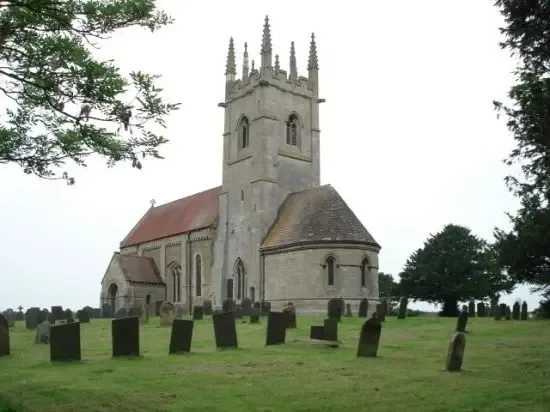
St Andrew's is the Grade I listed Anglican parish church of Sempringham, standing alone amid open fields in the South Kesteven district of Lincolnshire, near Pointon and Billingborough. It sits within the Church of England parish of South Lafford, in the Diocese of Lincoln. The church is small but of exceptional historical significance: it was here, in the 12th century, that England's only home-grown monastic order was founded.
Sempringham appears in the Domesday Book as "Stepingeham." Around 1100, Jocelin of Sempringham built a new church here, dedicated to St Andrew, replacing an earlier Saxon church. Jocelin's son was Gilbert of Sempringham — the parish's rector, and the only English saint to have founded a monastic order.
History
In 1131, Gilbert established a simple range of buildings against the north wall of the church to house seven local women who vowed to live lives of charity, obedience, chastity and humility — the beginning of the Gilbertine Order. Alexander, Bishop of Lincoln, helped establish these religious buildings as a protected precinct. When the original accommodation proved inadequate, Gilbert received a grant of land from Gilbert de Gant in 1139 and built a larger priory about 350 yards to the southwest, dedicated to the Blessed Virgin Mary.
Sempringham Priory grew into a double house, home to as many as 200 nuns and 40 canons, with the canons observing a strict blend of Augustinian and Premonstratensian rule — so strict that in 1170 the priory's lay brothers rebelled and appealed to the Pope for relief. By the time Gilbert died at Sempringham in 1189, there were 13 Gilbertine priories across England; the order would eventually grow to 25 houses by the Reformation. Gilbert was buried in the priory church, and when he was canonised in 1202 his body was exhumed, encased in a lead coffin and reburied within the church — though the exact site of his grave has since been lost. Sempringham became an important site of pilgrimage as a result.
In 1283, following King Edward I's defeat of Prince Llywelyn of Wales, the infant Welsh princess Gwenllian — Llywelyn's daughter and heir, and granddaughter of Simon de Montfort — was sent to Sempringham to live out her life in the priory's enforced custody, kept away from any focus for Welsh rebellion.
Little of the priory itself survives above ground today; its site is visible only as earthworks and cropmarks in the surrounding fields. After the Dissolution, the site passed to Lord Clinton, who built the vast Sempringham Hall over the priory's ruins — a mansion nearly as grand as the great Tudor palaces of its day, though it stood for barely a century before it too vanished.
St Andrew's Church itself retains genuine fragments of its Norman origins in its south doorway and north arcade. The tower dates from the late 14th century, while the apsidal chancel was rebuilt in the Victorian era, in 1868–69, by the architect Edward Browning.
Questions about St Andrew? Write to hello@wellsprings.group.